

Wood or Composite Decking: Which Is the Better Choice?
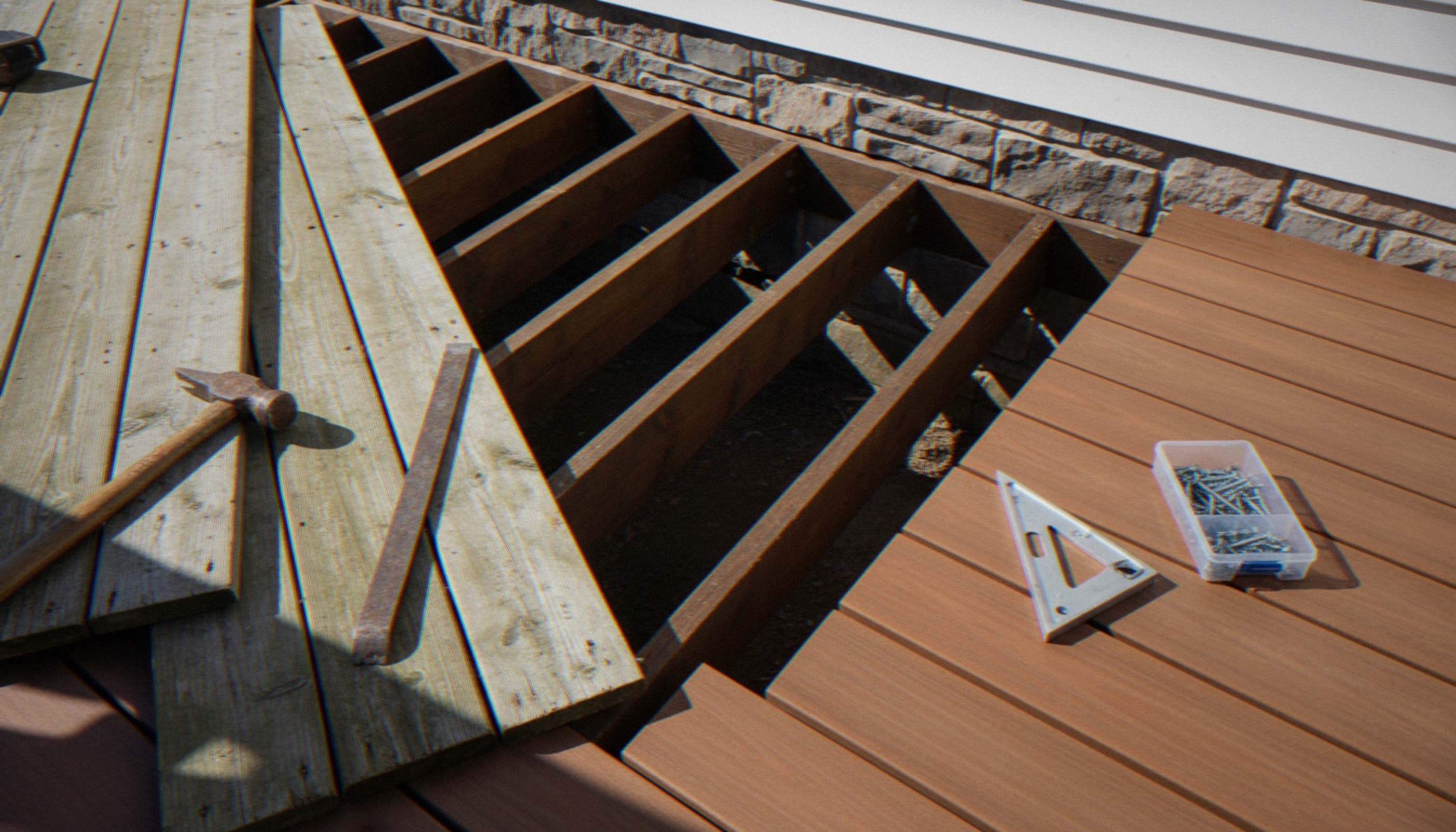
Of all the decisions in a deck project, the choice of decking material shapes the budget, the maintenance routine, and the look of your outdoor space more than anything else. Wood and composite each have genuine strengths, and the better option depends less on which is "best" in general and more on how you plan to use and maintain your deck.
What Wood Decking Offers
Pressure-treated lumber is the most affordable route to a full-size deck and is widely available. Cedar and other naturally rot-resistant woods offer richer color and a more premium feel. Real wood has a warmth and natural character that many homeowners prefer, and it can be refinished in a different color down the road if your tastes change. It's also easier to repair in sections, since individual boards can be replaced without special ordering.
What Composite Decking Offers
Composite boards, made from a blend of wood fibers and plastic, are designed to resist rot, insects, and splintering. They don't need staining or sealing, which is the main reason homeowners choose them. Modern composites come in a wide range of colors and grain patterns, and higher-end lines look remarkably close to real wood. PVC decking, a fully synthetic cousin, offers even greater resistance to moisture and staining.
Comparing Upfront Cost
Wood is generally the lower-cost option at installation. Composite typically costs significantly more per square foot for the boards themselves, and the premium tiers cost more again. For homeowners working within a firm budget, wood often makes a larger deck possible. For those who can invest more upfront, composite shifts cost from the future to the present.
Comparing Maintenance
This is where the two materials differ most. A wood deck needs regular cleaning and periodic staining or sealing to hold up against sun and moisture, and skipping that work shortens its life. A composite deck needs occasional washing to remove dirt and mildew but no staining. Over a decade or two, the cumulative time and cost of maintaining wood can narrow or even close the upfront price gap.
Comparing Lifespan and Durability
A well-built and well-maintained wood deck can last many years, but it's vulnerable to rot, warping, and insect damage if neglected. Composite resists those problems and typically carries a long manufacturer warranty, though it isn't maintenance-free or indestructible. It can fade slightly over time, and lower-quality products may show surface issues like mold or staining.
Surface Temperature and Comfort
Composite, particularly in darker colors, can get noticeably hot under direct summer sun. Wood tends to stay a bit cooler underfoot. If your deck gets full sun and you'll be walking on it barefoot, color choice and material matter. Lighter shades of composite help, and some products are engineered to reduce heat absorption.
Appearance and Feel
Wood looks and feels like wood, because it is. Its grain, knots, and variation are part of the appeal. Composite offers consistent color and pattern, which some people love for its uniform, clean look and others find less natural. If possible, look at physical samples outdoors in natural light, since appearance in a showroom or a catalog can differ.
Slip Resistance and Safety
Both materials can be slippery when wet depending on the product and surface texture. Many composite lines offer grooved or textured finishes, and wood can be brushed or treated to improve traction. If your deck surrounds a pool or sits in a shaded, damp area, ask specifically about slip resistance.
Environmental and Practical Considerations
Some composite products use recycled content, which appeals to environmentally minded homeowners. Wood is a renewable resource but may involve chemical treatment. Availability and installation requirements also differ: composite often needs specific fasteners and tighter attention to spacing and ventilation, so working with a builder who has real experience with the product matters.
Matching the Material to Your Situation
If you want the lowest upfront cost, love the look of real wood, and don't mind periodic upkeep, pressure-treated or cedar is a sound choice. If you'd rather spend more now to spend less time and money on maintenance later, composite makes sense. Many homeowners also mix materials, using composite for decking boards and wood for railings, or vice versa, to balance cost and appearance.
Questions to Ask Before You Decide
How long do you plan to stay in the home? How much time do you want to spend maintaining the deck? How much sun and moisture does the location get? What is your realistic budget today versus over the next ten years? Answering these honestly usually points clearly toward one option.

Not sure which decking material fits your home and budget? We'll walk through your site, show you real samples, and give you honest pricing on each option. Get your free deck building estimate and compare them side by side.

Karter & Co


