

Two-Tone Cabinets: The Kitchen Trend Homeowners Are Requesting
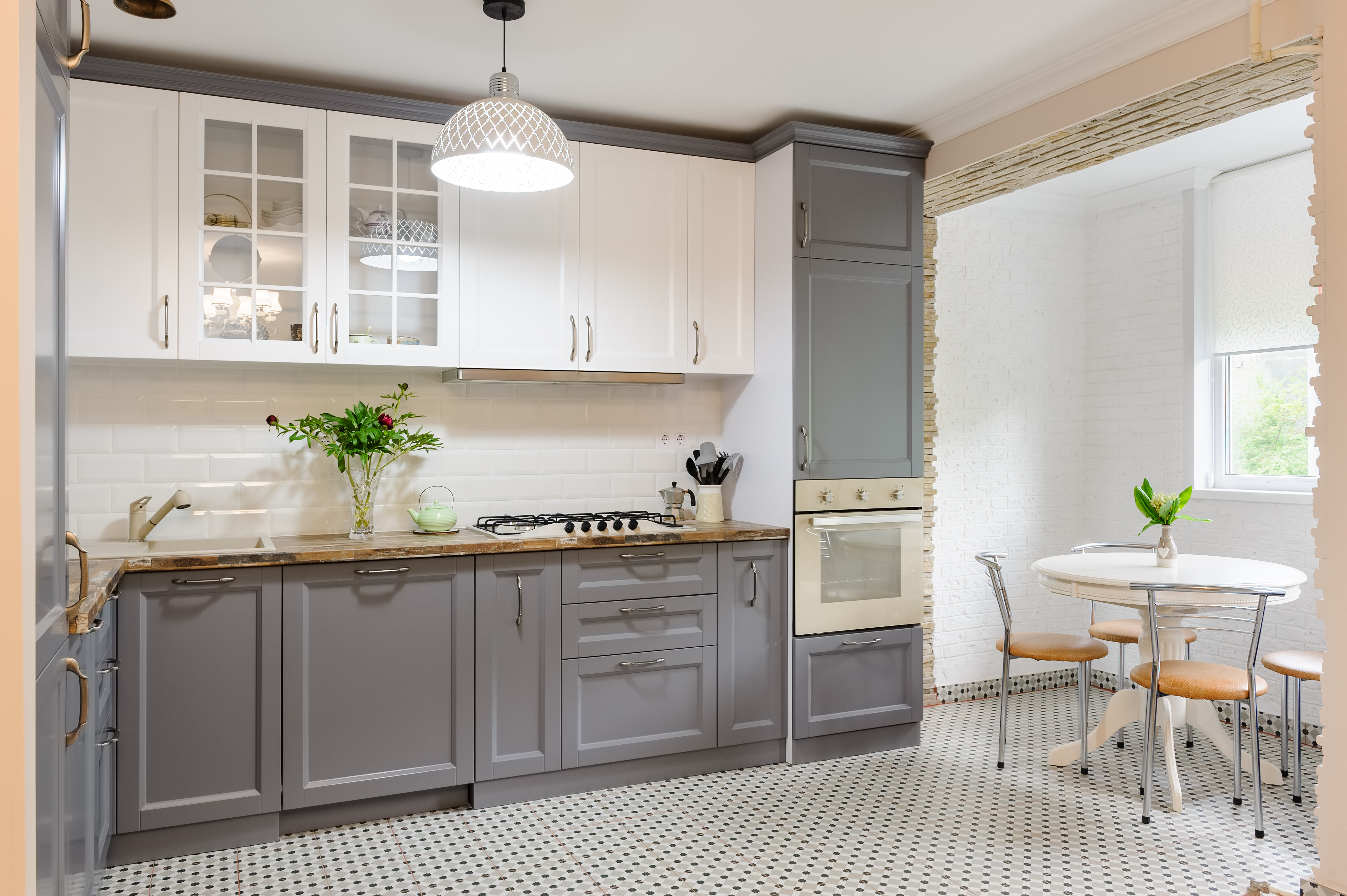
Solid white kitchens have been the dominant trend for years, and while they remain a safe, popular choice, two-tone cabinet painting has become one of the most requested upgrades for homeowners looking for a more custom, designed look without a full remodel.
What Two-Tone Cabinets Actually Means
Rather than painting every cabinet the same color, two-tone kitchens use two complementary colors strategically — commonly a darker shade on lower cabinets and a lighter shade on uppers, or a contrasting color on a kitchen island against neutral perimeter cabinetry.
Popular Two-Tone Combinations
- Deep navy or charcoal lowers paired with soft white or cream uppers
- Sage or muted green island against warm white perimeter cabinets
- Black lower cabinets with natural wood-tone or white uppers for contrast
- Warm wood-stained island kept natural while surrounding cabinets are painted a soft neutral
Why Islands Are a Popular Starting Point
For homeowners hesitant to commit to two-tone across an entire kitchen, painting just the island a contrasting color is a lower-risk way to introduce the trend, since the island naturally functions as a visual anchor in most layouts.
Choosing Colors That Complement Your Space
Two-tone works best when the two colors genuinely complement each other and the rest of the kitchen — countertop material, backsplash tone, and flooring all factor into which combinations look cohesive rather than mismatched.
Two-Tone and Resale Considerations
Bold combinations can be a striking personal choice, but homeowners planning to sell within a few years should consider that highly saturated pairings may appeal to a narrower range of buyers than a classic all-white kitchen.
Getting Two-Tone Right in Execution
Because two-tone painting involves precise, clean lines between colors, this is a project where professional application really shows — uneven or bleeding lines are much more noticeable than a slightly imperfect single-color job.
How to Decide Where the Color Break Should Happen
The line between two colors typically follows a natural break point — where upper cabinets end and lower begin, or an island's edges — which tends to look more intentional than an arbitrary line.
Considering Hardware Alongside a Two-Tone Update
Updating hardware finish alongside a two-tone repaint can help tie the two colors together visually and give the whole kitchen a more cohesive, finished look.
Why Two-Tone Isn't Limited to Full Kitchens
A butler's pantry, bar cart cabinet, or laundry room cabinet run can also benefit, offering a lower-cost way to experiment before committing to a full kitchen.
How Lighting Affects Two-Tone Color Perception
Since two colors are viewed side by side, differences in how each responds to lighting become more noticeable — testing both under your kitchen's actual lighting confirms the pairing works before committing.
Why Some Homeowners Choose a Subtler Approach
Rather than a dramatic contrast, some prefer two closely related tones, which still adds visual interest without the boldness of a high-contrast pairing.
Considering the Long-Term Commitment
Living with paint samples for a few days before finalizing helps, since a bold pairing that feels exciting on day one occasionally feels overwhelming as a daily backdrop.
How to Update a Two-Tone Kitchen Later
Updating just the lighter or darker portion — rather than repainting the whole thing — is a reasonable way to refresh the look without a complete redo.

Bring a custom, designed look to your kitchen without a full remodel. Our team can help you choose a two-tone combination that works with your countertops, flooring, and hardware, then execute clean, precise lines between colors. Get your free cabinet painting estimate and explore two-tone options.

Karter & Co


