

Stain or Paint Your Wood Cabinets? How to Choose Between Restaining and a Painted Finish
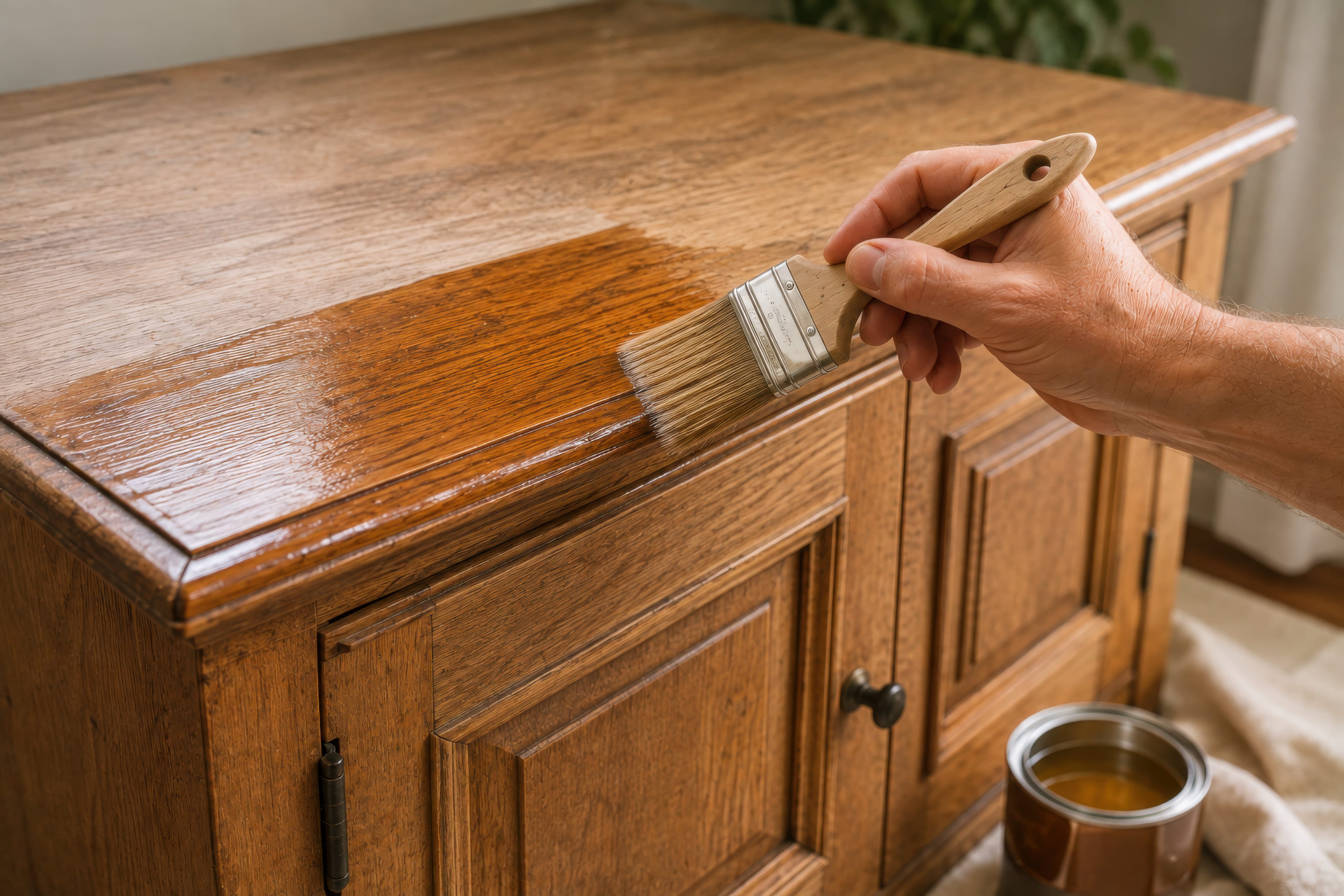
Solid wood cabinets with tired finishes face a choice: refresh the stain and let the wood shine, or cover it with paint and start with a clean slate. Both can transform a kitchen, but they work very differently. Stain enhances the grain and warmth of real wood, while paint hides it and can make a dated kitchen look modern. The right choice depends on the wood species, the current finish, the condition of the cabinets, the style of your home, and how much work and maintenance you want. Understanding the tradeoffs, and what each process involves, helps you avoid a result you regret, since going back is difficult.
What Each Finish Does
Stain colors the wood while allowing the grain to show through, and a clear topcoat protects it. Paint forms an opaque film that covers the grain and gives uniform color. Stain emphasizes natural beauty, while paint offers a wide color range and a clean look.
Wood Species Matter
Oak has prominent grain that remains visible under paint unless filled. Maple is smooth and takes paint beautifully but can blotch with stain. Cherry stains richly and darkens with age, and birch can be blotchy. Knowing your species helps predict how each finish will look.
The Condition of the Wood
Stain shows every flaw, including dents, scratches, water damage, and uneven color. Paint can hide many imperfections with filler and primer. If cabinets are damaged or inconsistent, paint is often more forgiving. Beautiful, well-preserved wood may deserve to stay visible.
Existing Finishes
Most cabinets have a factory topcoat, such as varnish or catalyzed finish, over a stain. To restain, you generally need to remove the old finish, which is time-consuming, or use a product designed to go over it. Painting requires sanding or deglossing and a bonding primer, but doesn't require stripping.
Restaining by Stripping
Stripping removes the old finish down to bare wood, allowing fresh stain to penetrate evenly. It's messy and labor-intensive, with chemicals, scraping, sanding, and careful cleanup, particularly around detailed doors. It gives the most natural result but is often the most expensive.
Gel Stain Over Existing Finish
Gel stains are thick and sit on the surface, so they can be applied over a scuffed existing finish. They change the color without stripping, though results are less transparent and may show brush marks. They're a popular option for darkening cabinets but may not look the same as a traditionally stained finish.
Going Darker vs. Lighter
It's much easier to go darker than lighter. Stain adds color, so lightening dark cabinets means stripping and sometimes bleaching the wood. If you want lighter wood, paint may be a more practical option.
Painting Over Stained Wood
Painting is the most common approach for updating cabinets, since it can cover almost any existing finish with proper prep. Grain may still show on oak, which some people like and others fill. Paint can be changed again in the future with repainting.
Grain Filling on Oak
Oak's open grain can telegraph through paint, giving a textured look. Grain filler smooths the surface for a flat, modern appearance, but it adds time and cost. Decide whether you want the texture or a smooth finish before painting.
Appearance and Style
Stained wood feels traditional, warm, and natural, and it suits rustic, craftsman, and classic kitchens. Painted cabinets suit farmhouse, transitional, coastal, and modern looks. Think about your home's character and your design goals.
Color Options
Stain colors range from light natural to deep espresso, with limited variety compared with paint. Paint offers nearly unlimited colors, from white and gray to bold hues. If you want a specific color, paint is more flexible.
Two-Tone Possibilities
Combining stained and painted finishes creates two-tone kitchens, such as painted perimeter cabinets with a stained island. This preserves some wood warmth while updating the look. It requires careful color coordination.
Durability
Both finishes can be durable when done well. Stain with a quality topcoat resists wear, while paint can chip at edges and handles. High-quality cabinet paints and proper curing give strong protection. Application quality matters more than the type.
Maintenance and Touch-Ups
Painted cabinets may need occasional touch-ups at corners and handles, which are easy to blend with matching paint. Stained cabinets may be harder to touch up invisibly because matching stain and grain is tricky. Consider your tolerance for maintenance.
Cost Comparison
Painting is often less expensive than stripping and restaining, though quality prep and finish aren't cheap. Gel staining costs less than stripping but more than basic cleaning. Get quotes for each approach, with details about prep.
Time Required
Painting typically takes several days, plus curing time. Stripping and restaining can take longer because of drying between steps. Plan your kitchen schedule accordingly.
Veneer and Thin Wood Surfaces
Some cabinet doors have a thin wood veneer over a core. Aggressive sanding can cut through the veneer and ruin the surface. Check construction before choosing stripping. A professional can tell what you have.
Test Before You Commit
Test your chosen approach on a hidden area, such as a cabinet back or inside a door. Evaluate color, grain, and adhesion. A test saves expensive regrets.
Impact on Home Value
Fresh, well-executed finishes help in either direction. Neutral painted cabinets appeal to many buyers, while beautiful stained cabinets in good condition appeal to those who love natural wood. Consider your market and timing.
Reversibility
Painted cabinets can be repainted, but returning to natural wood requires stripping and may not be possible. Stained cabinets can be painted later. If you're unsure, staining preserves the option to paint later.
Hardware and Countertops
Cabinet finish interacts with hardware, countertops, backsplash, and flooring. Look at samples together. A cohesive palette makes any finish look better.
Cabinet Interiors
Most refinishing focuses on exteriors, but interiors may need cleaning or touch-up. Some owners paint interiors for consistency. Discuss scope with your finisher.
Environmental and Odor Considerations
Stripping and some stains involve strong chemicals and fumes, while modern water-based finishes have lower odor. Ventilation and product choice matter, especially in occupied homes.
Choosing a Finisher
Look for experience with your chosen process, examples of completed work, and clear communication about prep and curing. Ask how they handle stripping, grain filling, and topcoats.
Pickling, Glazing, and Other Decorative Finishes
Beyond basic stain and paint, finishers can apply glazes to highlight detail, pickled or whitewashed finishes for a soft grain-showing look, and distressing for a rustic style. These finishes take skill and may not suit all wood types. Ask to see samples on your wood.
Color Matching and Touch-Ups
Matching stain to existing cabinets, such as on a new island, is difficult, because stain reacts differently on different wood and ages over time. Painted finishes are easier to match. If you plan to add cabinets, consider a finish that's easier to coordinate.
What Happens to Wood Grain
Stained wood shows grain patterns, knots, and color variation. Some people love this character, while others prefer uniformity. Paint hides grain and creates a more uniform look, though grain filler may be needed for a perfectly smooth finish.
Cabinet Doors Off or On
Professionals usually remove doors and drawer fronts to finish them flat, which gives smoother results. Cabinet boxes are finished in place. Numbering doors and hinges makes reassembly accurate.
Sheen Choices for Stained Cabinets
Clear topcoats come in satin, semi-gloss, and matte. Satin is a popular balance of durability and subtlety. Glossy finishes highlight imperfections, while matte finishes may show marks. Test sheen samples in your kitchen lighting.
Protecting Your Finish Over Time
Wipe spills quickly, avoid harsh cleaners, use gentle cleaning methods, and add bumpers to doors. Heat and steam near ovens and dishwashers can damage finishes. A little care keeps either finish looking new.
Questions to Ask Before Deciding
What species are my cabinets? What's the current finish? Can they be restained without stripping? How will the grain look under paint? What will it cost and how long will it take? A good finisher will answer these clearly and show examples.
Refinishing Kitchen vs. Bathroom Cabinets
Bathroom vanities see more moisture and need durable, water-resistant finishes, whether stained or painted. Kitchen cabinets deal with grease and heat. Choose products suited to each room, and make sure doors and boxes are sealed on all edges.
Handling Damaged or Worn Spots
Worn finishes around handles and edges can be repaired before refinishing by sanding, filling, and feathering. For stain, repair is harder, because bare wood shows. For paint, filler and primer hide damage more easily.
Working With the Existing Kitchen Layout
Finish choice should work with your countertops, flooring, and backsplash. Wood cabinets in a warm stain pair with certain stones, while painted cabinets open up color options. Bring samples of your surfaces when comparing finishes.

Not sure whether to stain or paint your cabinets? We look at your wood species, existing finish, and style, show you samples of both options, explain the prep and cost of each, and finish with durable, professional coatings. You'll decide with real samples in hand. Get your free cabinet refinishing estimate today.

Karter & Co


