

Should You Repair or Replace Your Flooring?
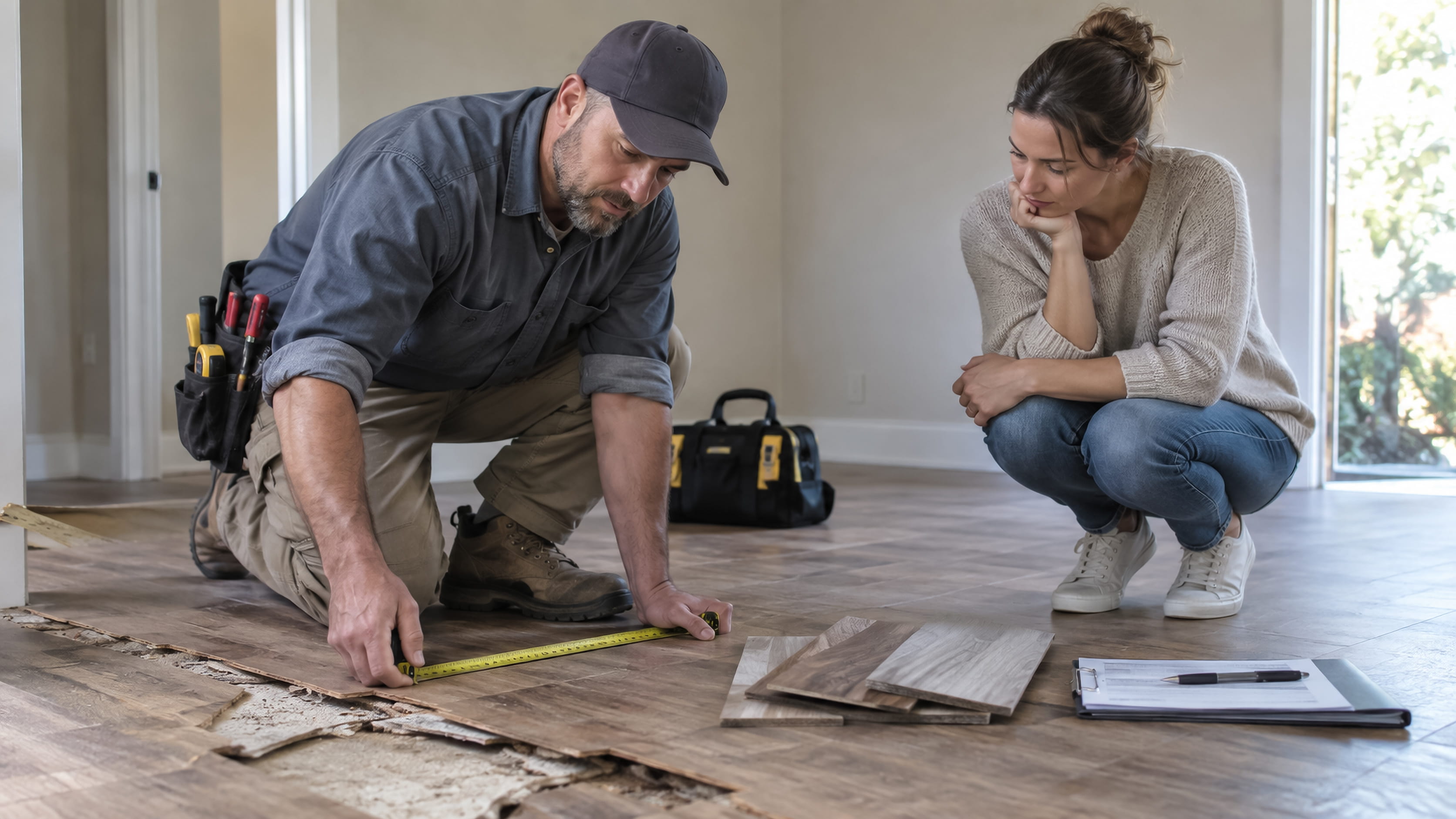
Every floor eventually shows its age. Scratches, stains, gaps, squeaks, and soft spots appear, and homeowners are left asking the same question: can this be fixed, or is it time to start over? The answer depends on what's wrong, how widespread it is, what the floor is made of, and what's happening underneath. Making the right call saves money, and it also prevents small problems from turning into larger and more expensive ones.
Start by Finding the Cause
Before deciding on a repair, figure out why the damage happened. A scratch from furniture is cosmetic. A cupped board near a dishwasher points to a moisture problem. A squeak that moves around suggests loose subfloor. Repairing the surface without addressing the cause usually means the problem returns. A good contractor looks for the source, not just the symptom.
Signs a Repair May Be Enough
Localized damage is often repairable. A few scratched or dented boards, a cracked tile, a burn mark, a torn section of carpet, or a plank damaged by a dropped object can usually be addressed without touching the rest of the floor. If the surrounding floor is solid, flat, and in good condition, targeted repair is typically the most economical path.
Signs You Should Consider Replacement
Widespread wear, repeated failures, large areas of water damage, soft or rotted subfloor, extensive mold, or pervasive cupping and buckling suggest replacement. If the floor has reached the end of its useful life, or if the product is no longer made and can't be matched, patching may look mismatched and cost more over time than starting fresh.
Refinishing Is a Third Option for Hardwood
Solid hardwood and thick engineered wood can often be sanded and refinished, which removes surface scratches, stains, and worn finish and can change color. This costs far less than replacement and can make an old floor look new. Refinishing isn't possible if the wood is too thin, deeply damaged, or structurally compromised. A professional can measure the wear layer to see whether it's an option.
Squeaks, Gaps, and Movement
Squeaks usually come from loose boards or subfloor rubbing against fasteners and can often be fixed without replacing the floor, using screws or specialized hardware. Small seasonal gaps in hardwood are normal as humidity changes. Large or growing gaps, or boards that lift, may signal moisture or installation problems. Evaluate whether the issue is cosmetic, seasonal, or structural.
Water Damage Requires Careful Assessment
Water can wreck flooring, but the extent depends on how long it sat and what material it affected. Quick drying can save some floors, while prolonged moisture causes swelling, warping, mold, and subfloor damage. Never assume a floor is safe because it looks dry on the surface. Moisture can remain underneath, so measurements and inspection matter before deciding.
Mold and Odors
A musty smell, discoloration, or visible mold under or around flooring is a serious sign. Surface cleaning is not enough if the source persists. In these cases, removal of affected material, drying, and addressing the moisture source are typically required. Health considerations make this a problem to take seriously.
Tile and Grout Problems
Cracked tiles can often be replaced individually if matching material is available, and grout can be cleaned, repaired, or regrouted. Widespread cracking suggests movement in the subfloor, and replacing tiles without addressing that movement will lead to new cracks. A hollow sound when tapping tiles indicates loose bonding that should be evaluated.
Vinyl and Laminate Issues
Click-together planks can sometimes be removed and replaced if you have spare material and the damage is localized. Peeling, curling, or bubbling indicates adhesive or moisture problems. If the product is discontinued, matching can be difficult, which pushes some homeowners toward replacing an entire room.
Carpet Wear and Damage
Localized damage such as burns or stains can be patched. Widespread matting, wear in traffic patterns, persistent odors, and loose backing suggest replacement. Stretching can fix some ripples, but it won't solve a worn-out carpet. Pad condition also affects comfort and longevity.
The Cost Comparison
Repairs are cheaper upfront, but repeated repairs can add up, especially if they treat symptoms of a deeper problem. Replacement costs more initially but resets the clock. Compare the total cost of ongoing fixes with the cost of replacement over the next several years. A contractor can help you weigh the numbers honestly.
Matching Is the Hidden Challenge
Even when a repair is technically possible, matching the existing floor can be hard. Color changes with age, finishes vary between batches, and discontinued products may not be available. A repair that looks obvious can bother you every day. Be realistic about how noticeable the patch will be.
Think About Your Plans
If you plan to sell soon, a clean, even floor adds appeal, and a visible patchwork may not. If you plan to stay, durability and comfort matter more. Your timeline influences whether a limited repair makes sense or whether investing in a full solution is smarter.
Consider the Whole Room, Not Just the Spot
When repairing flooring in the middle of an open space, transitions between old and new can be awkward. Sometimes replacing a defined area, such as a full room up to a natural break like a doorway, produces a more cohesive result than patching a spot in a continuous expanse.
Look at the Subfloor Before Deciding
A floor can be worn out for reasons that have nothing to do with the surface layer. If the subfloor is damaged, uneven, or damp, any new or repaired floor will suffer. Inspection beneath the surface often changes the decision.
How a Professional Assessment Helps
A trained eye can distinguish cosmetic issues from structural ones, identify moisture sources, measure remaining wear layers, and estimate costs for each option. An honest assessment should present repair, refinish, and replace options, with pros and cons, instead of pushing the most expensive solution.
Preventing the Next Problem
Whichever path you choose, prevention matters. Use protective pads, control humidity, wipe spills promptly, keep drains and appliances in good condition, and follow maintenance guidance for your material. Small habits protect a repaired or new floor.
Questions to Ask Before You Decide
What caused the damage? Is the subfloor sound? Can the material be matched? How noticeable will a repair be? What will each option cost now and over time? What warranty applies? Clear answers make the choice easier.
Reading the Warning Signs Room by Room
Different rooms fail in different ways. In kitchens, look for lifting edges near the dishwasher and sink, which suggest slow leaks. In entryways, look for worn finish and gritty damage from tracked-in dirt. In bathrooms, look for discolored grout, soft spots near tubs, and loose tiles. In bedrooms, look for matted traffic paths on carpet and creaks near doorways. Walking each room slowly, in good light, tells you where the real problems are rather than where they appear to be.
Estimating How Much Life Your Floor Has Left
Every material has a rough service life, but actual life depends on use and care. A floor with a thin remaining wear layer, widespread scratching, and multiple failed repairs is near the end. A floor with sound structure and only cosmetic wear may have many years left. A professional can measure wear layers, check fastening, and judge whether investing in repair or refinishing still makes sense, or whether you'd be paying to prolong the inevitable.
When an Exact Match Isn't Possible
If your product has been discontinued, or the existing floor has changed color with age and sunlight, a new piece may never blend perfectly. In those cases, consider replacing a whole defined area, such as an entire room up to a natural break, rather than leaving an obvious patch in a high-visibility spot. Sometimes salvaging boards from a closet or hidden area provides a better match for repair than buying new.
Temporary Fixes and Their Limits
Wood filler, color markers, adhesive, and quick patches can disguise minor damage and buy time. They're useful for small cosmetic issues, but they don't solve structural or moisture problems. Treat them as short-term measures, and don't let a cosmetic fix hide a problem that needs real attention, such as a rising moisture level beneath the floor.
How Professionals Test for Hidden Problems
Experienced installers tap tiles to listen for hollow sounds, use moisture meters on wood and subfloor, check flatness with a straightedge, and walk the floor to feel for movement. These checks reveal conditions the eye can't see. A contractor who relies on these tests is more likely to give you an accurate recommendation than one who just glances at the surface.
Coordinating Repairs With Other Projects
If you're planning to paint, update trim, or remodel a kitchen or bath, think about the order of work. It often makes sense to complete heavy work first, then install or refinish floors, and finish with paint touch-ups. Repairing a floor before a messy project risks damaging it again, while delaying a needed repair risks worsening damage. A good plan avoids doing the same work twice.
Check Your Warranty Before Repairing
Some manufacturer warranties limit repairs or require specific methods. Cutting into a floor or using the wrong product could affect coverage. Review the paperwork and ask your installer whether a repair would comply. If the floor is still under warranty, a defect may be covered, so document the problem and contact the manufacturer or installer before fixing it yourself.

Not sure whether your floor can be saved? We'll inspect the surface and the subfloor, find the real cause of the damage, and give you an honest comparison of repair, refinishing, and replacement with real pricing for each one. You'll know exactly what makes sense before you spend anything on a fix that won't last. Request your free flooring assessment and get a straight answer.

Karter & Co


