

Deck Lighting Ideas: How to Light Your Deck for Safety and Atmosphere
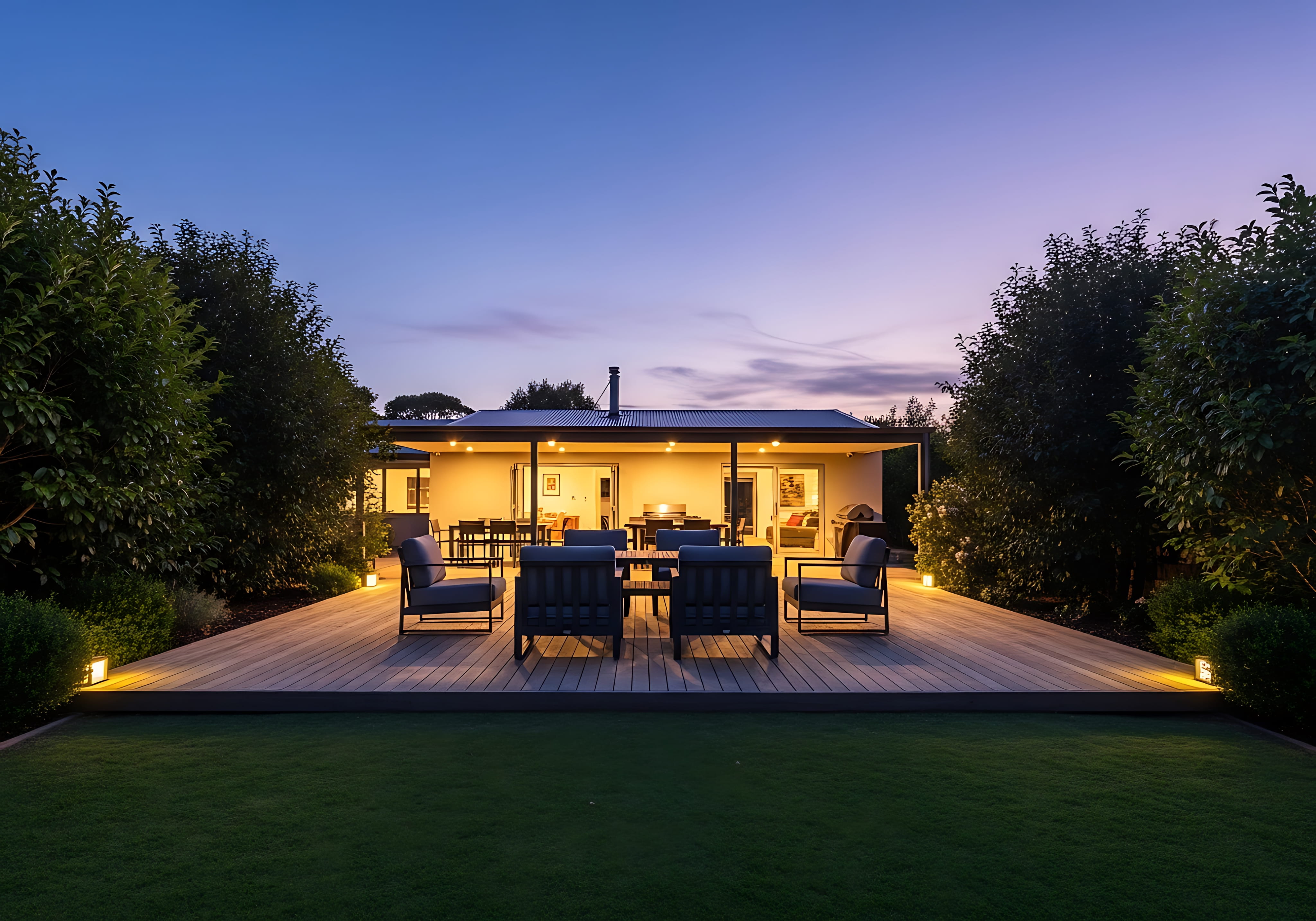
A deck that goes dark at sunset is a deck that gets used half as much. Good lighting extends your outdoor season into the evening, makes steps and edges safe, and gives the space a warm, inviting feel. The best lighting is planned along with the structure, not added as an afterthought, because wiring is far easier to run before the boards go down. Here's how to think about lighting a deck, from the practical to the atmospheric.
Why Lighting Matters
Lighting does three jobs at once. It provides safety by illuminating steps, edges, and walkways. It provides function by letting you cook, dine, and read after dark. And it provides atmosphere by shaping the mood of the space. A well-lit deck feels welcoming and extends the usefulness of your investment.
Plan Lighting Early
The best time to decide on lighting is before construction. Wires, conduit, and fixtures can be built into posts, rails, risers, and framing for a clean look and easy access. Adding lights later often means visible cables, drilling through finished surfaces, and more cost. Even if you install fixtures later, building in conduit or access points helps.
Layer Your Lighting
Good lighting uses layers: ambient light for general illumination, task light for activities like cooking, and accent light for beauty. A single bright floodlight tends to feel harsh. Combining soft overhead light, low-level path lights, and a few accents creates a comfortable, flexible setting.
Stair Lighting
Stairs need clear illumination to prevent trips. Options include riser lights that shine on the tread below, small recessed lights in the stringers or posts, and rail lights. Lighting stairs evenly, without glare, helps people judge each step. This is one of the most valuable safety features you can add.
Post Cap Lights
Lights mounted on railing posts provide gentle illumination around the perimeter. They define the edges of the deck, add a decorative element, and help guests see where the deck ends. Solar and low-voltage versions are common, and hardwired options provide consistent brightness.
Under-Rail and Handrail Lighting
LED strips tucked under the handrail or top rail cast light downward onto the deck, creating a soft glow with little glare. This approach keeps fixtures hidden and highlights the structure. It requires careful wiring and weatherproof components.
Recessed Deck Lights
Small lights set into the deck surface or fascia provide low-level illumination along walkways. They must be rated for outdoor use and installed to keep water out. Because they are embedded, placement should be planned carefully to avoid conflicts with framing.
Overhead Lighting
Lights under a pergola, roof, or eaves provide general illumination for dining and entertaining. Fixtures can be recessed, surface mounted, or hanging. Ceiling fans with lights combine comfort and function. Wiring for overhead fixtures should be planned in the structure.
String Lights
String lights create a festive, cozy atmosphere and are popular for decks. They need secure anchor points and power access. Use commercial-grade or outdoor-rated strings for durability, and plan support wires or posts so they don't sag. Dimmable options add flexibility.
Task Lighting for Cooking and Dining
Grill areas and outdoor kitchens need adequate light for safe cooking. Task lights over counters and grills, or clamp-on lights, make nighttime cooking easier. Dining areas benefit from softer lights that don't glare in diners' eyes.
Low-Voltage vs. Line-Voltage Systems
Low-voltage lighting runs on a transformer at a reduced voltage and is common for decks because it's safer and easier to install. Line-voltage systems use standard household current and may offer greater brightness but require stricter installation and often a licensed electrician. Choose the system that fits your needs and local rules.
Solar Lights
Solar lights are easy to install and require no wiring. They work well for small accents but may not provide consistent brightness, especially in shade or during winter. For key safety areas, hardwired or low-voltage lighting is more reliable.
LED Technology
LED fixtures use little energy, last a long time, and come in a range of colors and brightness levels. Warm white tones create a cozy feel, while cooler tones feel crisp. Choose consistent color temperature across fixtures for a unified look.
Dimmers and Controls
Dimmers let you adjust brightness for different activities. Timers and smart controls turn lights on and off automatically or by app. Motion sensors can provide security lighting. Plan controls for convenience and energy savings.
Avoiding Glare and Light Pollution
Bright, exposed bulbs can create glare, wash out the night sky, and annoy neighbors. Shielded fixtures, downward-facing lights, and lower brightness reduce these problems. Good lighting highlights surfaces and paths without overpowering the space.
Weatherproofing and Safety
Outdoor fixtures must be rated for wet or damp locations, and connections must be sealed. Cables should be protected from damage and routed to avoid tripping hazards. Electrical work should follow local requirements, and a licensed electrician should handle line-voltage connections where required.
Wiring and Access
Plan where cables run, where the transformer sits, and how you'll access connections for service. Hidden wiring should still be accessible for repairs. Labeling circuits and keeping diagrams makes future changes easier.
Lighting Under the Deck
For raised decks with usable space beneath, lighting improves safety and usability. Fixtures must be protected from moisture, and the area should be well ventilated. Under-deck lights can also create a glow around the perimeter.
Lighting the Landscape Around the Deck
Path lights, uplights on trees, and garden lights extend the experience beyond the deck itself. Coordinating deck and landscape lighting creates a cohesive effect. Avoid over-lighting, which flattens the scene.
Maintenance and Replacement
Check fixtures periodically for water intrusion, corrosion, and loose connections. Replace bulbs or modules as needed, and clean lenses. Keeping fixtures in good condition ensures reliability and safety.
Budgeting for Lighting
Lighting costs vary widely depending on the system and number of fixtures. Basic solar or plug-in options are inexpensive, while integrated hardwired systems cost more but offer better performance. Prioritize safety lighting first, then add decorative elements as budget allows.
Common Mistakes
Skipping stair lighting, using fixtures not rated for outdoor use, creating glare, forgetting about wiring until after construction, and over-reliance on solar lights are common errors. Planning ahead avoids most of them.
Fixture Materials and Finishes
Outdoor fixtures come in aluminum, brass, copper, stainless steel, and composite. Brass and copper develop a natural patina and last for decades, while powder-coated aluminum resists corrosion at lower cost. In coastal or humid areas, choose materials that stand up to salt and moisture. Matching finishes to hardware and furniture creates a polished look.
Understanding Color Temperature
Light color is measured in kelvins. Warm white lights, around the lower end of the range, create a cozy, inviting atmosphere. Cooler tones feel crisp and bright. For decks, warm tones usually feel most natural, and they flatter wood and skin tones. Using the same color temperature across fixtures keeps the look cohesive.
Lighting Plans by Deck Size
A small deck may need only a few stair lights and a string of lights overhead. A medium deck benefits from post caps, stair lights, and a lit dining area. A large, multi-level deck needs layered lighting with separate controls for different zones. Scaling the plan to the deck keeps it practical and balanced.
Smart Controls and Scenes
Smart systems let you set scenes, such as dinner, party, or late-night, with the touch of a button or voice command. Schedules can turn lights on at dusk and off at night. These features add convenience and security, but they should be reliable and simple to use.
Adding Lighting to an Existing Deck
You can add lighting to a finished deck, though it may be more visible and require creative routing. Surface-mounted fixtures, clip-on lights, and solar options can work. For hardwired systems, an electrician can route cables through the framing. Planning carefully minimizes damage to finished surfaces.
Lighting Outdoor Kitchens and Grills
Cooking areas need bright, even light where you chop, grill, and serve. Task lights should be shielded to avoid glare. Make sure lights are rated for the heat and moisture around grills, and keep wiring protected.
Respecting Neighbors and the Night Sky
Choose shielded fixtures that direct light downward, and avoid overly bright lamps that spill into neighboring yards. Good lighting is subtle and purposeful, and it keeps the night sky visible. Motion sensors can limit unnecessary light.
Energy Use and Costs
LED lighting uses little energy, so running costs are modest. Timers and sensors can reduce use further. Consider the cost of transformers and controls when planning, and choose quality components to avoid frequent replacement.
When to Hire an Electrician
Anything involving line-voltage wiring, new circuits, or connections to your panel should be handled by a licensed electrician. Even low-voltage systems benefit from professional design for safety and performance. Local rules often require permits and inspections for electrical work.

Want a deck you can enjoy long after sunset? Our team plans lighting with the structure, from stair lights and post caps to under-rail LEDs and overhead fixtures, with wiring built in so it stays clean and safe. You'll get a lighting plan that fits your deck and budget. Request your free deck building estimate and light it right.

Karter & Co


