

Cleaning and Sealing Concrete: Driveways, Patios, and Walkways Done Right
Concrete looks tough, and it is, but it's also porous. Over the years a driveway, patio, or walkway soaks up oil, tire marks, rust, leaf tannins, algae, and salt, and the surface gradually darkens, stains, and starts to flake. The good news is that most concrete can be restored to a clean, even appearance with the right cleaning methods, and protected with a sealer that slows future staining. The bad news is that doing it wrong can etch the surface, leave blotchy results, or trap moisture under a coating that peels. Understanding how cleaning and sealing work helps you get a result that lasts.
Why Concrete Gets Dirty
Concrete is full of tiny pores and capillaries that absorb liquids. Rain carries dirt and organic matter into the surface, shaded areas grow algae and mildew, vehicles drip oil and drop hot tire residue, and metal furniture or fixtures leave rust. Over time these contaminants build up, which is why concrete often looks gray, blotchy, or stained even when it's been swept regularly.
Start With an Honest Assessment
Before cleaning, walk the surface and note what you're dealing with: general dirt, oil, rust, algae, efflorescence, paint, or chewing gum. Look for cracks, spalling, and loose surface material. Different stains need different treatments, and heavy damage may need repair rather than cleaning. A careful survey prevents wasted effort.
Sweeping and Pre-Wetting
Sweep away loose debris, and pre-wet the surface and nearby plants so cleaning solutions don't soak in and harm vegetation. Pre-wetting also helps cleaners work on the surface instead of being absorbed deep into dry concrete. Starting clean sets up everything that follows.
Pressure Washing Concrete
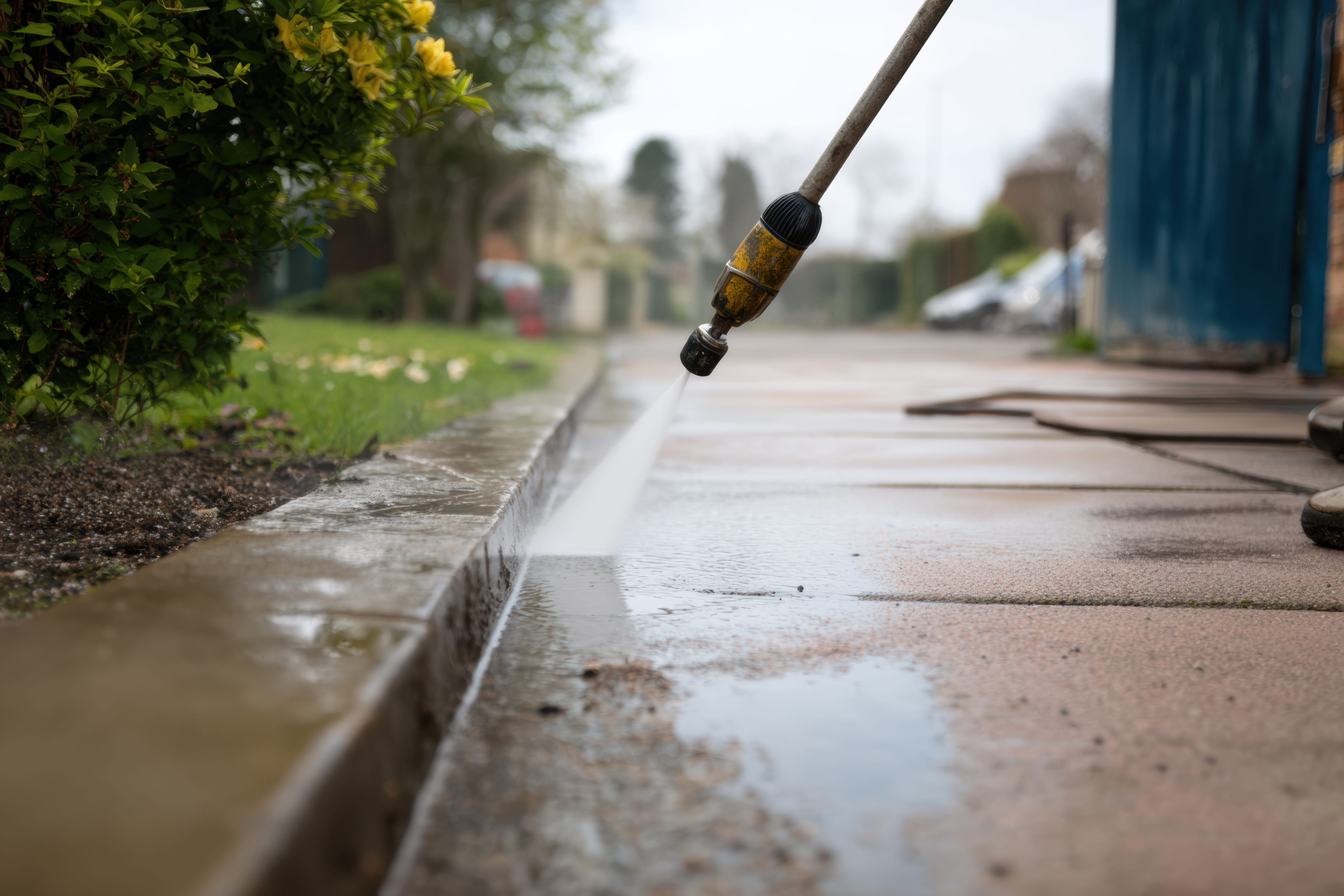
Concrete handles pressure well, and pressure washing removes most surface dirt, algae, and loose grime. The key is using a wide fan nozzle or a surface cleaner attachment, which is a rotating bar that cleans in even passes. Holding a narrow nozzle too close leaves streaks, or "zebra stripes," and can etch the surface. Even passes and consistent distance give a uniform result.
Surface Cleaners vs. Wand Cleaning
A surface cleaner covers large flat areas quickly and evenly, with far less striping than a wand. A wand is better for edges, steps, and tight spots. Professionals often use both, with the surface cleaner on the open areas and the wand to finish the details.
Removing Oil and Grease
Oil sits deep in the pores, and pressure alone rarely removes it. Fresh spills can be absorbed with an absorbent material such as clay or sawdust. Degreasers formulated for concrete break down older stains, and poultices pull oil from deep inside the slab. Old stains may lighten rather than disappear entirely.
Using a Poultice
A poultice is an absorbent paste mixed with a solvent or cleaner and spread over the stain. As it dries, it draws the stain out of the concrete. Several applications may be needed. It's a slow but effective method for stubborn oil stains, and it's less aggressive than scrubbing.
Rust Stains
Rust comes from metal furniture, fertilizer, sprinkler water with iron, and tools left on concrete. Rust removers designed for concrete dissolve the iron and lift the stain. Follow the product directions carefully, since some products are acidic and can damage surrounding surfaces or plants. Test first in an inconspicuous area.
Algae, Mildew, and Moss
Shaded, damp concrete grows green or black organic matter that makes surfaces slippery. Cleaning solutions designed to kill algae and mildew, followed by rinsing, remove it and slow regrowth. Trimming back overhanging vegetation and improving drainage reduces recurrence.
Efflorescence
Efflorescence is a white, powdery residue of mineral salts that migrate to the surface as moisture evaporates. It's a sign that water is moving through the concrete. Dry brushing and mild acid-based cleaners can remove it, but unless the moisture source is addressed, it returns. Persistent efflorescence may indicate drainage problems.
Tire Marks and Hot Tire Pickup
Hot tires can leave dark marks that bond with the surface, especially on sealed or smooth concrete. Specialized cleaners and scrubbing remove most marks. A good sealer helps prevent them from setting in.
Paint, Chewing Gum, and Other Stuck-On Items
Stuck-on materials need targeted removal. Scrapers, heat, solvents suited to the substance, and strippers for paint can work, followed by pressure washing. Test any chemical on a small area first.
Protecting Plants and Surroundings
Cleaning solutions and runoff can harm grass and plants. Wet landscaping beforehand, rinse afterward, cover delicate plants, and direct runoff away from beds. Be mindful of drains and local rules about discharge.
Letting the Concrete Dry
Before sealing, concrete must be fully dry. Moisture trapped under a sealer can cause cloudiness or peeling. Depending on weather and humidity, drying may take a day or more. Never seal damp concrete.
Repairing Cracks and Damage First
Fill cracks with a flexible sealant or concrete crack filler, patch spalled areas, and address heaving or settling before sealing. A sealer won't hide structural problems. Repairs should cure fully before the sealer goes on.
Why Seal Concrete at All
Sealing reduces the amount of water, oil, and dirt that can penetrate the surface, makes cleaning easier, resists freeze-thaw damage and salt, and can enhance color. It isn't mandatory, but it extends the life and appearance of concrete significantly, particularly for driveways and patios.
Penetrating Sealers
Penetrating sealers soak into the concrete and react chemically inside the pores, repelling water without changing the surface much. They provide a natural look, don't peel, and are breathable. They suit driveways, walkways, and exposed concrete where a natural finish is desired.
Film-Forming Sealers
Film-forming sealers, such as acrylics, create a thin coating on the surface. They can enhance color and give a wet-look or satin sheen. They wear over time and need reapplication, and they can become slippery when wet unless an anti-slip additive is used. They work well on decorative or stamped concrete.
Epoxy and Polyurethane Coatings
Epoxy and polyurethane coatings are used mostly on garage floors and heavy-duty surfaces. They're durable and chemical resistant, but they require meticulous preparation and are not ideal for exterior areas exposed to UV unless specifically formulated. Poor prep leads to peeling.
Slip Resistance
Smooth sealed surfaces can be slippery when wet. Adding a fine anti-slip additive or choosing a penetrating sealer helps maintain traction, especially around pools, steps, and ramps. Safety should guide product choice.
Choosing the Right Sealer
Consider the location, the climate, how the surface is used, and the look you want. A driveway exposed to salt and traffic needs a different product than a decorative patio. Ask your contractor what they recommend and why, and check that the product is rated for your conditions.
Applying Sealer
Sealer is applied with a sprayer, roller, or both, in thin, even coats. Puddles and heavy application cause cloudiness or bubbling. Work in the right temperature range and avoid direct, hot sun. Follow the manufacturer's recoat and cure times before allowing traffic.
Weather and Timing
Apply sealer in dry, mild weather, with no rain forecast for at least a day or two. Avoid applying in extreme heat or cold. Keep vehicles and foot traffic off until the product has cured, which can take a day or several.
New Concrete
New concrete needs time to cure before it can be cleaned aggressively or sealed. Many sealers recommend waiting several weeks, so check the product instructions. Sealing too early can trap moisture and cause problems.
Maintenance After Sealing
Sweep regularly, rinse spills promptly, and wash the surface periodically with gentle cleaners. Avoid harsh de-icers, which can damage even sealed concrete. Reseal when water stops beading, typically every few years depending on exposure and product.
Common Mistakes
Using too much pressure, holding the nozzle too close, sealing damp concrete, applying too thick a coat, skipping crack repair, and choosing the wrong sealer are common errors. Each can lead to streaks, peeling, or damage.
When to Hire a Professional
Professionals have surface cleaners, commercial-grade products, and experience matching methods to stain types. They can also advise on sealers and apply them evenly. For large driveways, heavy stains, and decorative concrete, professional help usually delivers a better result.
Decorative and Stamped Concrete
Stamped and colored concrete needs gentler cleaning, because aggressive pressure can wear the color layer and texture. Use a lower pressure and a wide fan, and choose a sealer that enhances color without becoming slippery. Resealing on schedule keeps decorative surfaces vibrant.
Pool Decks and Wet Areas
Concrete near pools stays damp, grows algae quickly, and needs slip resistance. Cleaning removes slick growth, and a sealer with anti-slip additive improves safety. Rinse chemical residue after cleaning, and keep drains clear.
Protecting Concrete From Salt and Deicers
Salt and some deicers speed up freeze-thaw damage and scaling. A good sealer helps, and rinsing salt off in spring reduces long-term damage. Choose concrete-safe products where you can.

Want your concrete to look clean and stay that way? Our crew identifies each stain, cleans with the right method and equipment, repairs cracks, and applies a sealer suited to your surface so driveways, patios, and walkways resist stains and last. You'll get a clear plan and a firm price. Request your free pressure washing estimate today

Karter & Co


